You entered a password or OTP
Change the password wherever it was reused, review sessions and recovery settings, and notify the affected provider. An OTP may have approved a login or transaction, so state exactly when and where it was entered.
Recover in the right order
The safest response depends on what happened: clicking a link, sharing a password or OTP, installing an app, sending money, or exposing identity documents. Start with the action that limits further loss.
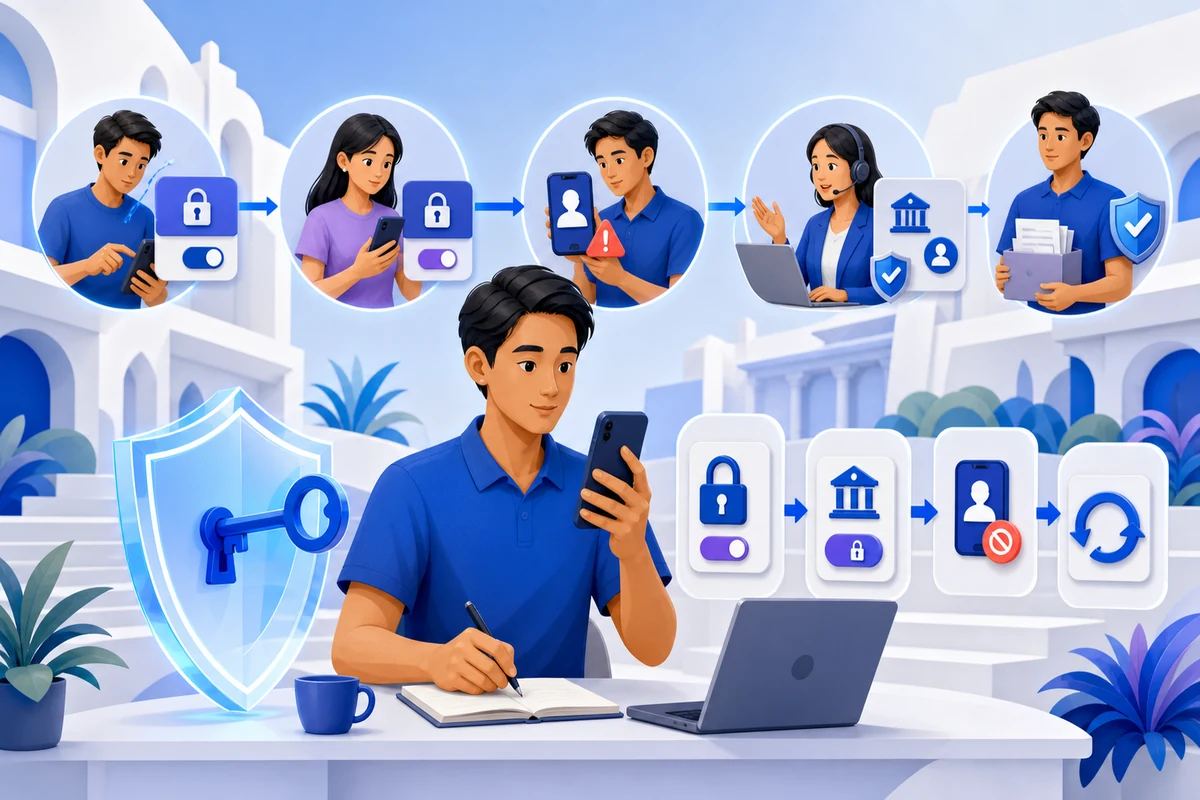
Scammers often demand another payment for tax, verification, withdrawal, cancellation, or recovery. Stop contact and do not send more. Act from a trusted device and tell providers the complete story, including any code, access, or approval you gave.
Work through these priorities even if you do not yet know the full impact.
End remote-access sessions, disconnect a suspicious device from sensitive activity, and contact financial providers. Ask whether cards, accounts, beneficiaries, devices, or transactions should be blocked.
Email often controls password resets. Change its password from a trusted device, sign out unknown sessions, remove forwarding rules, review recovery details, then secure banking and messaging accounts.
Save messages, account names, URLs, receipts, transaction IDs, and the sequence of events. Evidence helps the bank, platform, and investigators understand what occurred.
Tell contacts if a messaging or social account may be used to impersonate you. Report to the platform and appropriate Philippine channels, retaining every reference number.
Different forms of access require different recovery actions. Do not assume that changing one password fixes everything.
Change the password wherever it was reused, review sessions and recovery settings, and notify the affected provider. An OTP may have approved a login or transaction, so state exactly when and where it was entered.
Remove remote access, stop using the device for sensitive accounts, and seek trusted technical help. Change important passwords from another known-safe device.
Contact the payment provider immediately and ask about recall, hold, dispute, or fraud procedures. Recovery is not guaranteed, but delay reduces the available options.
Ask issuers and affected providers about replacement, monitoring, or fraud flags. Watch for new accounts, SIM changes, password resets, and impersonation attempts.
Ignore unsolicited recovery offers. Contact each organisation yourself.
Use the official fraud or customer-protection channel for blocking, review, dispute, and transaction tracing.
Escalate only after reporting to the BSP-supervised institution and obtaining its complaint reference.
Call hotline 1326 and follow CICC instructions for the incident and evidence.
Banks, platforms, and investigators may need time and cannot guarantee that money will be returned. Anyone who guarantees recovery in exchange for a fee, crypto payment, remote access, or secrecy is creating a second scam.